Friday, March 6, 2009

Listen up, people!

Last Epiphany B Feb. 22, 2009

2 Kings 2:1-12; Psalm 50:1-6; 2 Corinthians 4:3-6; Mark 9:2-9

“This is my son, the Beloved. Listen to him!”


What does it mean to listen – truly listen? To listen to God? To another person?

To list

en to what is going on in the world around us?


To listen means more than mere hearing, the mere physical sensation of sound waves hitting the ear drum. The old English roots of “to listen” are “to pay attention.” When we truly listen we lean in toward the person who commands our attention.


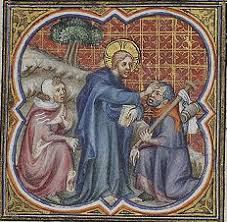
These past weeks we have been listening to stories of Jesus healing people. If we really paid attention to those stories, we would see that they are not about the mere physical healing, but about restoration – the person is brought back into community, into wholeness, in her family, into his society.


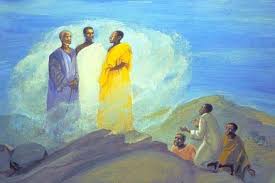
It is easy to be dazzled by God – to see so much glory or majesty or distance or power that we, perhaps, miss the point. In this story where Jesus and his disciples climb the mountain, something astounding happens – so astounding that the disciples do not know what to make of it. Jesus is transfigured – changed – morphed – yet all that dazzling glory gets in the way. The disciples are afraid – who wouldn’t be? Rather than leaning in, paying attention to what is going on on that blazing mountain, they step back. They want to contain the experience, by building shelters, erecting tents, hiding away this thing so glorious that they can barely stand it. They are so missing the point that God has to shout out from the cloud, Hey you! Stop running around! THIS is my Son, the one I love. Listen to him!


Jesus stands there with Moses the lawgiver and Elijah the prophet. Both Moses and Elijah acted for God when things were bad for the people – Moses was the liberator who brought the people out of Egypt, the one who put up with their grumbling in the wilderness, the one who told them how God wanted them to live. Elijah, the man of God, lived when the people were ruled by corrupt kings and were tempted to worship other gods. Both Moses and Elijah are massive figures in Jewish memory and imagination. Jesus is standing on that mountaintop with the A Team, definitely.


But think on this: neither Moses nor Elijah got to the finish line. Moses died, having seen the Promised Land to which he was leading the people, but not able to cross over. Our story today, about Elijah leaving earth in the chariot of fire, is a story also of not being finished. There is more work to do, and Elisha, Elijah’s successor, feels unready to take up the task. What does is say that Jesus stands there with these two mighty ones?


This story is smack dab in the middle of the Gospel of Mark. From this point onward, Jesus is heading toward Jerusalem. Soon after these verses, Jesus tells the disciples the hard news of what they will face: the confrontations with the powers, the heavy burden of the cross, the inevitable suffering and death.


The disciples no more want to listen to this hard news than they can comprehend the dazzling glory of the mountain. Listening to Jesus now involves much more than they counted on when they became his disciples.


We are about to enter Lent; the church has always put this lesson of Jesus on the mountaintop, of God shouting out, “Listen to him,” on this Sunday before the beginning of Lent.


Lent is the time, then, when we are to be listening to God. When we are supposed to be paying attention to what God is doing in the world. In that sense, then, Lent is the season of solidarity. It is the season when we pay attention to what is going on – when we notice who is sick and in need of healing. When we notice what is out of whack in the world, what needs to be restored. When we listen to the cries and whispers, the hopes and dreams, of God’s people, the people God has put in our care.


Lent is the time we listen to Jesus. We try out that heavy cross a little bit. We pay attention to that dazzling glory. And we wait, in the days of lengthening daylight, for the great time of trial that lies ahead. Listen.

Tuesday, February 17, 2009

Epiphany 6-B
February 15, 2009

2 Kings 5:1-14;
Psalm 30; I Corinthians 9:24-27; Mark 1:40-45

Leprosy, which today we call Hansen’s Disease, is treatable. So treatable that it can be considered curable. People with leprosy can live normal lives, if the disease is caught and treated on time.

But when the Bible says someone has leprosy, think of if as something really, really bad. It is nearly a death
sentence. The person with leprosy moves to the margins of society, not only shunned but feared; not merely sick, but unclean, untouchable, unfit for human companionship.

Naaman was a really powerful man. He was the general of a conquering army. The Bible says that even God thought well enough of Naaman and his skill as a general
that God gave victory to this enemy of Israel. It would be like Syria marching in and taking over Israel – as earth-shattering today as it was thousands of years ago. Naaman was the conqueror. The Spanish conquistadores to the Aztecs. The U.S. Cavalry to the Plains Indians. The Roman legions dividing Gaul into three parts.

Astounding, but Naaman has a flaw, which could be fatal. He has leprosy. This apparently not a secret; even the conquered slaves knew this, and one of them, this unnamed girl, dares to speak up and offer a solution. Naaman could be cured, she says, by a prophet in conquered Israel.

So look what Naaman does: the powerful King of Aram sends a negotiator to the King of Israel, to plead for his friend. This approach of power-broker to power-broker does not work. The king of Israel does not trust this request to help
his enemy.

Like the unnamed captive girl, who offers her solution through the back door, Elisha, the man of God – not the man of “the king” – similarly breaks through the official denials. “Let him in,” he says. “Let him learn that there is a prophet in Israel.”


So with his display of power and privilege and wealth and pride, Naaman marches over to Elisha. What happens then? So what do we learn from this story about how God works? Who has power? Who heals? And how? Who makes a difference – who changes the world
? Who are we in this story?

Think of who we are, in this church, in this community, at St. Paul’s Table, on Pleasant and Green streets? Where are we in this story of Naaman the Syrian? What needs healing?


The Gospel gives us another story about Jesus healing someone – this time, a leper, like Naaman the Syrian. Jesus says that curious thing: don’t talk about this, he tells the former leper. It’s very curious, isn’t it: why would Jesus want to keep all this good news, these healings and restorations and wonderful things, secret? I think Jesus realizes that there is somethin
g about the power of healing that upsets the apple cart – it upsets the balance of power. Jesus knows the power of healing. Some people like things the way they are: some people on top, some people sick, some people on the inside track, some people marginal outsiders. For some people this is OK.

Listen to these verses from the 4th chapter of the Gospel of Luke. Je
sus had just taught a lesson from the Torah in his hometown synagogue. All were astounded at his wisdom – “at the gracious words that came from his mouth.” Acknowledging their praise, Jesus then said, "‘Truly I tell you, no prophet is accepted in the prophet’s home town. …There were also many lepers in Israel in the time of the prophet Elisha, and none of them was cleansed except Naaman the Syrian.’ When they heard this, all in the synagogue were filled with rage. They got up, drove him out of the town, and led him to the brow of the hill on which their town was built, so that they might hurl him off the cliff. But he passed through the midst of them and went on his way."

Like it or not, God worms God’s way into our midst. Captive girls speak words of wisdom. Oddball prophets say, sure, let in your enemy; give him a chance. When we ask God to heal us, we have no idea what to expect. We might think things will be the way they used to be, and all of a sudden we are in completely new territory. Someone is healed, someone else is threatened, and all of a sudden the whole world changes before our very eyes.

What will it take to be healed? What will it take for this community to be restored and whole? I think these lessons tell us that that healing will never happen if we wait for the people in power. Look at how God works: from beneath, below, around the corner, from the outside, from the place that surprises us. We may be like that girl who whispers in Naaman’s wife’s ear, or like Elisha who says, sure, let the enemy leader in. We too might be like that former leper, befriended by Jesus along the road, who, despite the risks that somebody powerful might be unhappy, finds it impossible to keep all this good news to ourselves.

Restored to wholeness

Epiphany 5-B

February 8, 2008

Isaiah 40:21-31
Psalm 147

1 Corinthians 9:16-23

Mark 1:29-39


When I was in seminary, I had a professor who had no arms. He had been born with a birth defect, and over the course of his life had learned to do with his feet many of the things that the rest of us do with our hands. After a while you didn’t notice much different about him, even when he’d sit at the lunch table and pick up his fork with his toes.

I went to seminary in New York City. There was a woman who used to stand on the sidewalk in front of Bloomingdale’s, a rather fancy department story, and shout, “Help me. I’ve got cerebral palsy. Help me. I’ve got cerebral palsy,” over and over again. I think she was asking for money, but since I never stopped to ask her what kind of help she wanted, I don’t really know.

Also, when I was in seminary, I went to a service commemorating “disability awareness week” or something like that. It was at the Chapel of the Church Center for All Nations – an expansive place, which welcomes all kinds of worshippers. The celebrant was an Episcopal priest who served the deaf community. One young man stands out in my memory – he was the preacher, I think, a disability rights advocate. He was an amputee, I think. I know he refused to wear prosthesis – artificial limbs – because he had no interest in making those of us who were “fully abled” feel more comfortable with his disability. He also refused to use those metal crutches with arm holders that many people use – again on the grounds that they served to make “able-bodied” people feel more comfortable because they could categorize him as “disabled.” He preferred using wooden crutches, like anyone would use.

All these stories, along with today’s Gospel story of the healing of Simon’s mother-in-law, raise these questions: what is sickness? What is health? What does it mean to be healed?

Last week, we read of how Jesus cast the demons out of a man possessed by what we today might call mental illness. In the words of the old hymn, Jesus “reclothed him in his rightful mind.” He restored him to wholeness. He cast out those outside forces which had invaded the man, and gave him back himself. No longer was he possessed by those alien forces; he could return to the rest of society, to his community and his family, as himself, restored, healed.

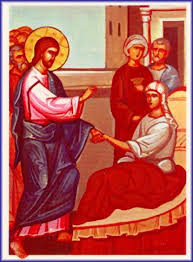
Whatever fever Simon’s mother-in-law has, it must be serious. The normal remedies must not be working. They way she is isolated and alone, even in the house, makes us think that perhaps they had given her up for dead. When Jesus touches her, healing happens, but not healing like we would think of a doctor making a house call. Jesus doesn’t administer an antibiotic, or apply leeches, or mix a poultice, or shake a magic rattle. Jesus touches her, and yes, she is relieved of the fever, but look what happens then: she is restored to her family. She joins the party. She gets up and helps serve. She regains her place of honor and dignity. She is no longer a patient; she is a person. She is restored, healed.

In those three stories of my seminary days, I think I learned that “healing” is not just about an individual who “gets better.” I don’t think there is a “cure” for cerebral palsy, nor can someone without limbs grow them back. Healing, for those people, challenges our definitions – OUR definitions – of wholeness. Wholeness is not perfection. Wholeness is not some idealized state of no flaws. Wholeness is about being human, fully human, being a full member of the human race. The sick person is isolated; the healed person, no matter what his or her state of disability may be, is restored from that isolation to wholeness, to community, to family and friends. The healed person is a productive and needed and loved member of society. This is what Jesus means by healing: those who were outcast, who were suffering and alone, are brought back inside the fold. Healing is not just “fixing an illness;” it is restoring a person to being, once again, a whole human being who has meaning and value and a place in the community.

Many of us wonder, and I know I have felt this way, when we are sick or in trouble, why me, why I am sick? What have I done to deserve this? Why can’t Jesus help me? Where is the healing in my life?

It is hard to climb out of those pits; no doubt about it, and there certainly are some things about our lives – all of our lives – that we don’t like, and like it or not, that will never change. We can stay there, carrying all those grudges, nursing all those hurts. We can perpetuate our isolation, thinking we are all alone in our troubles, and no, Jesus isn’t going to walk through that door and make everything better – or at least “better” in the way we think “better” ought to be defined.

But listen to this: we have what Jesus had. We have the promise from God that things will be better, that they are better. “Have you not known,” Isaiah writes. “Has it not been told you from the beginning?” We have the same promise from God that Jesus knew, that God gives power to the faint, and strength to the powerless – that God calls all – all of us – by name, and not one is missing: not the woman with cerebral palsy, shouting outside of Bloomingdale’s, not my professor who ate with his feet, not the disability activist who refused to hide his amputated limbs. Simon’s mother-in-law is there, and the man possessed by demons, and you, and, you and you, and you, and me. Everybody who is home sick today; everybody who is just too tired to get out of bed. We’re all there, called by God, called by hope, pulled out of our isolation and aloneness. This is what God promises us: with wings like eagles, we shall run and not be weary; we shall walk, every one of us, we shall walk and never grow faint.

Sunday, February 8, 2009

The Pleasant and Green Neighborhood

Epiphany 4b February 1, 2009
Deuteronomy 18:15-20
Psalm 111

1 Corinthians 8:1-13

Mark 1: 21-28


I know you won’t believe this, but church sometimes brings out the crazy in people.

Do religious institutions attract crazy people, or does just something happen to us once we get in here? Is it because places like these hold all our hopes and dreams? Because they speak of promises of a better life for the world God has created? Do we get angry because these are promises denied, or delayed?

Do these places make us crazy because our hopes are so high for them, and then so frequently dashed to the ground? Or are these places of safety, of refuge, where the troubled and angry and possessed know that they can come and be allowed to vent and rage and fume and act out. Quiet havens, broken dreams, unfulfilled promises: why do you come to this sacred space?


The Gospel of Mark tells us nothing about the neighborhood around the synagogue in today’s story. It’s in Capernaum, which was a city in Galilee – not a fancy town, but a town of fishermen, of traders, of people from all across the Roman Empire. A hardscrabble town.

It would not be a stretch to imagine the neighborhood around that synagogue to be something like the neighborhood around here. And it is not any kind of a stretch to imagine
someone walking in here, as angry and as loud and as possessed by any number of demons as the man in today’s story.

A couple of hundred years ago another crazy man walked into a church. The demons that haunted this man were, it can be said, coming at him from the outside. He lived in England during the early industrial revolution. He saw all the dark sides of those days – the ruined country-sides, the overcrowded cities, the soot-filled air, the overworked children, the lavish homes and lives of the rich. This is not what God intended for England, ranted William Blake:

And did the Countenance Divine
Shine forth upon our clouded hills?

And was Jerusalem builded here

Among these dark Satanic Mills?


New England as well as Old England knows what happened to those false promises of the industrial revolution. This church now owns a parsonage in what used to be a shoe factory. This city is now no closer to the centers of power – to Beacon Hill, say – than rough andtumble Capernaum, in hardscrabble Galilee, was from Jerusalem. Promises were made when this church was built, promises to be here, in this place, in this community, for a long, long time.

This community has changed – changed enough to make some people really, really crazy – and this church is still here, still opening our doors for whoever comes in, happy, sad, troubled, young, old, clothed and in their right minds, or ripping their shirts off and possessed by demons. This church is still here.


What makes us crazy, here between Pleasant and Green Streets? What gives us hope, here between Pleasant and Green, or should we call them, “not-so-pleasant” and “anything-but-green”?


Long ago, in that far-away synagogue in Capernaum, Jesus stopped the demon in his tracks. When we read in the Gospel of Mark about “demonic possession,” it is a metaphor for alien ownership. The person who is possessed by the unclean spirit is owned by someone other than God, just as Galilee and Judea were owned by the Roman Empire and not by the people who actually lived there, just as the very earth under the disciples feet and the sea in which they fished were owned by interests which put their profit ahead of people’s lives.

So much of Brockton is owned by somebody else. It’s enough to make you crazy. We are third in the state in the number of foreclosed homes. If you’ve lost your home, or can’t afford a home, or don’t live in MainSpring, then you rent: your home is owned by somebody else, and if it’s not heated, or maintained, or safe – well, it’s enough to make you crazy.


This church is still here. Can we live up to the promises we made over 100 years ago? Can we be the church God is calling us to be?


William Blake’s response to what he saw as the broken promises of England was to shake
his fist in anger:

Bring me my bow of burning gold!
Bring me my arrows of desire!

Bring me my spear! O clouds, unfold!
Bring me my chariot of fire!

I will not cease from mental fight,

Nor shall my sword sleep in my hand,

Till we have built Jerusalem
In England's green and pleasant land.

And so what about Brockton’s green and pleasant streets? Some remarkable things have happened this year – we have made great strides toward that mission to which God calls us, to be the church – the place of safety, refuge, hospitality, hope, transformation – in this place and at this time.

Sunday, January 18, 2009

Can anything good come out of Brockton?

Compare and contrast the two sermons I preached on these same texts, three years apart.

In 2009, the excitement of the pending inauguration was on my mind; in 2006, the urgency of discerning the mission of St. Paul's Church: What was God calling this little church to be and to do in Brockton. Read on ...


Epiphany 2-B

January 18, 2009

Samuel 3:1-10

Psalm 139: 1-5-12-17

1 Corinthians 6: 12-20

John 1:43-51


Our Old Testament lesson, from the First Book of Samuel, is about a change in leadership. An old regime has proved to be corrupt and inept and has lost its connection with God, who calls out to a newcomer, a young boy who does not even know what he is hearing, for the next generation of leadership in hard times.


Sound familiar?


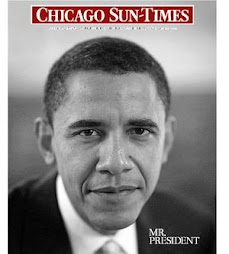
It’s an exciting week in America, and I’ve been watching a lot of the pre-inauguration coverage. I’ve been re-reading President-elect Obama’s speeches, especially his important speech on race and his election night speech. Believe me: I am not going to equate Obama with Samuel, or the Democratic Party’s victory with the divine hand of God at work in the election booth. I am not going to re-open the old talk of America being the “city on the hill,” the placed founded by the Puritans to be the embodiment of the kingdom of God on earth. No, there is no way we can equate our history, our politics, with the will of God – that is our national temptation, though, from the beginning of our history – to think that America is special in the eyes of God, that we are chosen, elect, better than everyone else.


I was reminded of Mr. Obama’s remarks at the Saddleback Church in California last summer, during the early days of the campaign, when the pastor, Rick Warren, asked both Obama and McCain:


“Does evil exist?” he asked each candidate, and if so, “Should we ignore it, negotiate with it, contain it or defeat it?”


“Evil does exist,” Mr. Obama began. “I mean, I think we see evil all the time. We see evil in Darfur. We see evil, sadly, on the streets of our cities. We see evil in parents who viciously abuse their children. And I think it has to be confronted. It has to be confronted squarely. And one of the things that I strongly believe is that, you know, we are not going to, as individuals, be able to erase evil from the world. That is God’s task. But we can be soldiers in that process, and we can confront it when we see it. Now, the one thing that I think is very important is for us to have some humility in how we approach the issue of confronting evil because, you know, a lot of evil has been perpetrated based on the claim that we were trying to confront evil.”


And when Mr. Warren interjected, “In the name of good,” Mr. Obama agreed, saying, “Just because we think our intentions are good doesn’t always means that we’re going to be doing good.”[1]


“Speak, Lord, for your servant is listening.”


That’s what Eli told the young Samuel to say to the voice that woke him in the night. Eli himself had lost the connection with God – prophecies were few and far between in those days; Eli’s own sons were greedy and ambitious and faithless, and the news that comes to the young Samuel from God spells the beginning of the end for Eli and his descendents. Yet there is enough wisdom in old Eli yet to know that this young boy is the future, and that God will act through surprising and new agents to pursue the divine agenda.


“Come and see.”


That’s what the disciple Philip said to the skeptical Nathanael, who wondered what all the fuss was about. “Can anything good come out of Nazareth?” he had snorted. Yet, when he meets Jesus, and has the conversation where Jesus reveals that he knows Nathanael, deeply, Jesus begins to reveal the mighty acts that God has in store. When you listen, truly listen, you never know where it will lead you, what new news it will bring, what mysterious wisdom will be imparted.


With the inauguration of Barack Obama, we are on the edge of momentous change in our nation. This is a moment of hope and promise, and given the very real dangers of the world today, a moment of risk and challenge as well. We do not know the direction God’s hand is taking us. We can only, as Obama himself implied, listen humbly, carefully, modestly, and know that, at best, “we can [only] be soldiers in that process” of the working out of what God has in store for the world. The best our nation has to offer – the best any nation has to offer – can only act in service to those purposes. We know God wants justice and mercy and compassion. God wants attention paid to widows and orphans and poor people. We know God’s standards, and if we know anything about where our nation is headed, our progress can be measured by how closely we hew to those standards.


But back to Samuel and Nathanael – Samuel the innocent and Nathanael the skeptical. What lessons do we take away from their stories for this moment in history?


They are both open. They tell the truth, and they know the truth when they hear it. When they don’t understand what is going on, they are not afraid to say so. Both of them receive challenging invitations to come closer to God, to listen more closely to look more closely. Neither know what will come of these closer encounters. When we listen for God, God invites us into a larger world than we had imagined before.


If they took those risks, we can, too. We can listen for God’s voice, in our nation in our community and in our own lives. Can we? As Barack Obama has been reminding us lately, Yes, we can!


Epiphany 2-B

January 15, 2006

Samuel 3:1-10

Psalm 139: 1-5-12-17

1 Corinthians 6: 12-20

John 1:43-51


Come and see.


By all reports, you – meaning you, people in the pews – rarely ask people to join you here in church. You don’t often say to your friends, “Come and see.” According to a recent survey, “Adults are lukewarm about God.” In a survey of Protestant church-goers, “not quite one out of every four named their faith in God as their top priority in life.”[2]


Stewardship, evangelism and service to needy people outside the church doors: in this same survey, Protestant pew-sitters admitted they weren’t doing much. “Church budgets are typically set based on the assumption that the average congregant will give two to three percent of their income to the ministry.” Even among those fervent born-agains: only six percent tithe, or give ten percent of their income to the church. “Most churched adults do not verbally share the gospel in a given year …” “For every two churches that consider the congregation’s breadth of ministry to people not connected to the church to be an indicator of spiritual health, there are five churches that focus on the amount of ‘in-reach’ activity undertaken [to people within the church].”


And yet what does Philip say in the Gospel? “Come and see.”


Philip said this to a very skeptical person, Nathanael, the faithful Jew, who spoke the truth: “Can anything good come out of Nazareth?” He was skeptical indeed at the message of Philip, that this Jesus was the one prophesied by Moses and the prophets, the one who was the Good News embodied. Nazareth, in grubby Galilee, was a nothing town, scorned by people in the know. Nathanael might even say, Can anything good come out of Brockton?


But I have a feeling, after a few weeks here, that all of you indeed know what you come here to see, and to feel, and to do.


Come and see.


Think for minute: what is it that you come here to see?


Add it up. It’s worth asking others to come and see it, too, is it not? You are not alone in not inviting folks in – all the surveys tell us that is what most Protestants just don’t do very often. You could do it. There is something for others to come and see. Tell them why you are here.

Listen to Jesus’ reply to Nathanael, who finally recognizes that Jesus is the Son of God. “Do you believe, Nathanael, that I am some sort of conjurer or fortune teller? That because I remembered you under the fig tree, I am the King of Israel? Well, you haven’t seen anything yet.”


When people say to you, Come and see what is happening at St. Paul’s in Brockton? You can say to them, you haven’t seen anything yet.


This is what Jesus told Nathanael he would see: “the heaven opened and the angels of God ascending and descending upon the Son of Man.”


“For us, this image of angel traffic between heaven and earth might at first seem pleasant, perhaps a little sweet. But it probably at once meant something deeper to Nathanael. He’d know well the Old Testament story of Jacob’s dream, where Jacob saw a ladder reaching to heaven with angels going up and down. Nathanael might also have noticed the difference in the image Jesus used. Jesus said the angels were going up and down not on a ladder, but on the Son of Man -- a subtle, but very important, difference. In both instances, the image of angelic traffic points to the connection between heaven and earth, the connection between God and God’s creatures. But in the image Jesus used, that connection between God and us resides in the person of Jesus. Jacob’s dream becomes very personal for us all.”[3]


For Nathanael, the faithful Jew who has studied and lived with the Torah, Jesus issues an invitation: there is more. You can connect with God, not just through that story of the ladder to heaven, but here, with me , with the person of Jesus. The connection with God that has always been there is renewed, with a new and shocking image. It’s like Jesus is saying to Nathanael, wake up. See something new in the old story. Something new is coming out of that old, forlorn city of Nazareth.


There is more, much more, to Brockton, and to St. Paul’s. Can any good come out of Brockton? Out of St. Paul’s? You can answer that question; come and see.


In the Old Testament lesson, we read of the young boy, Samuel, sent by his mother to serve God along with the old prophet Eli. Samuel is awakened in the night, and the aged Eli sends the boy back to bed. But the voices persist, and Eli realizes there is more to this disturbed sleep than a small boy’s dream. “Go and lie down,” Eli said to Samuel, “and if he calls you, say, ‘Speak, Lord, for your servant is listening.’ So Samuel went and lay down in his place, [and] the Lord came and stood there, calling as before, ‘Samuel! Samuel!’ And Samuel said, ‘Speak, for your servant is listening.’”


For what are we listening? You know the answer. You know why you are here. Come and see. Go and tell.


[1] From “Beliefs: Invoking a Presidential Revelatory Moment” by Peter Steinfels (New York Times, Jan. 16, 2009)

[2] All quotes from Surveys Show Pastors Claim Congregants are Deeply Committed to God but Congregants Deny it!, Barna Update, Jan. 9, 2006 – The Barna Group, Ltd.