Tuesday, June 16, 2009

It grows, we know not how

Proper 6-B; June 14, 2009
1 Samuel 15:34-16:13; Psalm 20
2 Corinthians 5:6-17; Mark 4:26-34

Simon’s 5th grade class had a science fair this week. Two of the children
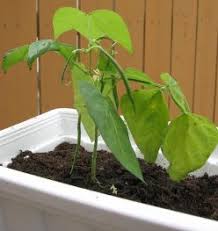
experimented with plants: did a plant grow faster if one played classical music, rock music or rap music next to it?

The children were convinced rap music did the trick. In one boy’s experiment, one plant was kind of shrunk down compared to the others. The other boy said that the rap music one was taller – the classical music one looked vigorous and healthy to me – but the rap music one had broken its stem on the way to school. But I was skeptical. Maybe I had today’s parable in mind: we sow the seed, but it sprouts on its own – it grows tall – we know not how. It grows to tall, ripe grain, or to become a shrub so mighty that the birds nest in its branches. Even controlling for variables in a scientific experiment, it is still God’s seed, God’s mystery, God’s power, God’s time.

That is kind of what is meant by “the kingdom of God.” That kingdom is not necessarily a place, with border guards and boundaries, but a sense of God’s power. God’s dominion. God rules here. God’s rules rule here. The seeds sprout and grow into plants. The sun rises and sets. We work, we sleep, we rise. We see God’s kingdom at work in the world around us.

Following the rules of God’s kingdom is a balancing act between the work God calls us to do, and an utter detachment from the results of that work. In every way, God wants us, I think, to participate in the work of that kingdom: to plant seeds. What are the seeds God has given you in your life? How do you think God wants you to participate in the kingdom of God?

What was God looking for when he chose David out of all the warriors offered to him, David, the youngest, to be the one chosen and beloved of God? What could David have possibly done to deserve such a blessing?

In the letter to the Corinthians, Paul encourages the believers. “The love of Christ urges us on,” Paul says. “If anyone is in Christ, there is a new creation: everything old has passed away.”

There are moments in our lives when we just can’t make things fit. Try as hard as we can, something just doesn’t work. A relationship, a task, a problem to be solved. Aren’t we just prone to worry ourselves sick? Don’t we just want to get this right, that perfect, to please ourselves, to please God? Is this what God would want? How do we know what is the right thing to do? What if we just worked a little harder, fixed this thing a little better, dug a little deeper, stayed up a little later? Wouldn’t there be more justice in the world? Wouldn’t there be more mercy? Wouldn’t things be RIGHT?

One of my favorite summer stories is set in New York City, in an indeterminate decade sometime in the middle of the 20th century. It’s a story of boys playing marbles on the street, in the deepening dusk. The narrator is Buddy, shooting marbles with his friend, Ira. Buddy’s brother, Seymour, comes up to them.

One late afternoon, at that faintly soupy quarter of an hour in New York when the street lights have just been turned on and the parking lights of cars are just getting turned on - some on, some still off- I was playing curb marbles with a boy named Ira Yankauer, on the farther side of the side street just opposite the canvas canopy of our apartment house. I was eight. I was using Seymour's technique, or trying to - his side flick, his way of widely curving his marble at the other guy's - and I was losing steadily. Steadily but painlessly. For it was the time of day when New York City boys are much like Tiffin, Ohio, boys who hear a distant train whistle just as the last cow is being driven into the barn. At that magic quarter hour, if you lose marbles, you lose just marbles. Ira, too, I think, was properly time-suspended, and if so, all he could have been winning was marbles. Out of this quietness, and entirely in key with it, Seymour called to me. It came as a pleasant shock that there was a third person in the universe, and to this feeling was added the justness of its being Seymour. I turned around, totally, and I suspect Ira must have, too. The bulby bright lights had just gone on under the canopy of our house. Seymour was standing on the curb edge before it, facing us, balanced on his arches, his hands in the slash pockets of his sheep-lined coat. With the canopy lights behind him, his face was shadowed, dimmed out. He was ten. From the way he was balanced on the curb edge, from the position of his hands, from - well, the quantity x itself, I knew as well then as I know now that he was immensely conscious himself of the magic hour of the day. 'Could you try not aiming so much?' he asked me, still standing there. 'If you hit him when you aim, it'll just be luck.' He was speaking, communicating, and yet not breaking the spell. I then broke it. Quite deliberately. 'How can it be luck if I aim?' I said back to him, not loud (despite the italics) but with rather more irritation in my voice than I was actually feeling. He didn't say anything for a moment but simply stood balanced on the curb, looking at me, I knew imperfectly, with love. 'Because it will be,' he said. 'You'll be glad if you hit his marble - Ira's marble - won't you? Won't you be glad? And if you're glad when you hit somebody's marble, then you sort of secretly didn't expect too much to do it. So there'd have to be some luck in it, there'd have to be slightly quite a lot of accident in it.' *
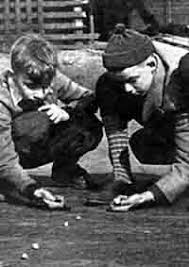
There are no accidents in the kingdom of God. We sow the seed, we shoot the marble, we reach out to the friend in need. The seeds sprout, we know not how, and when we turn around, a great tree has grown up in our midst, and the kingdom of God is here.

* J.D. Salinger, from "Seymour, an Introduction" in Raise High the Roof Beam, Carpenters and Seymour, an Introduction (New York: Little, Brown, 1963)

Monday, June 8, 2009

Jan Juan Jean Joao Yohana 3:16

Trinity-B; June 7, 2009
Isaiah 6:1-8; Psalm 29
Romans 8:12-17; John 3:1-17

How many of you have been to the southern United States? Not just Florida, but the deep south? The real south where the culture really is different?

Across the deep south – the “bible belt” of America – you can see billboards that read “John 3:16.” Nothing more. If you were a native speaker of the “deep south” you would know what that meant. But like with any culture that is not originally our own, such signs can be mystifying. The “in crowd” knows the cues; the rest of us are standing on the sidelines, scratching our heads.

That’s one of the problems with short-hand religion: since we don’t get the cultural cues, we think it must not apply to us. If Southerners put John 3:16 up on billboard, well, that might mean it’s not so good. Hold on, here: let’s not throw the baby out with the fundamentalist bath water. John 3:16 actually says some pretty good things. Let’s hear it in some other languages, languages that some of us here speak, languages that some of us here originally heard God speak to us:

Jan 3:16 (Haitian Creole Version)
Paske, Bondye sitèlman renmen lèzòm li bay sèl Pitit li a pou yo. Tout moun ki va mete konfyans yo nan li p'ap pedi lavi yo. Okontrè y'a gen lavi ki p'ap janm fini an.

Juan 3:16 (Nueva Versión Internacional)
Porque tanto amó Dios al mundo, que dio a su Hijo unigénito, para que todo el que cree en él no se pierda, sino que tenga vida eterna.

Jean 3:16 (Louis Segond)
Car Dieu a tant aimé le monde qu'il a donné son Fils unique, afin que quiconque croit en lui ne périsse point, mais qu'il ait la vie éternelle.

João 3:16 (O Livro)
Deus amou tanto o mundo que deu o seu único Filho para que todo aquele que nele crê não se perca espiritualmente, mas tenha a vida eterna.

Yohana 3:16 (Swahili New Testament)
Kwa maana Mungu aliupenda ulimwengu kiasi cha kumtoa Mwanae pekee, ili kila mtu amwaminiye asipotee, bali awe na uzima wa milele.

All these languages say the same thing: “For God so loved the world …” – not just the Spanish-speakers, or the Cape Verdeans, or the English, or the Trinidadians, or those white Southern Protestants who put up those billboards. “God so loved the world that he gave his only begotten Son.”

There is an author from this world of the deep Southern Bible belt, Flannery O’Connor. She was actually an Irish Catholic, but she grew up privileged, and white, and in the deep south of Georgia, and her novels and short stories took a long, hard look at this really quite distinctive culture. For sure it is a very religious culture, and a culture that can be seen as odd by some other Americans, and certainly by some others. Out of a lifetime of living in this deeply religious, deeply southern culture, this is how Flannery O’Connor reinterprets John 3:16:

… life “has, for all its horror, been found by God to be worth dying for."

“For God so loved the world that he gave his only-begotten son …” It’s the essence of the Good News in just a few words. The world, in all of its complications and troubles, is what God loves, and cares for. God wants to be here, in the middle of it all, begging, cajoling, pleading, instructing, working with us to make this world a better place – to make this world the place God intended it to be. We aren’t there yet, but that is the intention of God with us.

Our reading from Isaiah comes from a very different kind of literature: it’s spooky and mysterious and mythic. It’s an image of the Ancient of Days, and at first glance you might think, what has this to do with us? This image of the remote and all-powerful glory of God?

But look at the last lines: “Whom shall I send and who will go for us?” God is asking: who will tell God’s story? Who will bring God’s message to a world that very much needs it? How we will answer that? In our neighborhood, our community, our city, among our family and friends? That indeed is the central question of evangelism, the one that the short-hand version, of putting “John 3:16” up on billboards and hand-painted sign posts, addresses. Who will go for God into this world? Who will tell God’s story, of how much God loves this world and all of us in it?

All of us are in church today because SOMEONE bothered to tell us that story, and so I think you will know the answer to that question when God asks you: Who will go for us? Here am I; send me.

Monday, June 1, 2009

The Spirit of truth speaks

Pentecost/B; May 31, 2009
Acts 2:1-21; Psalm 104
Romans 8:22-27; John 15:26-27; 16:4b-15

Jesus Christ, Son of the Living God, speak through me to others. Jesus Christ, Son of the Living God, speak through others to me.

That old prayer is a form of Evangelism -- perfectly appropriate for Pentecost, the feast when we celebrate the Spirit of God speaking in many languages to the very new church gathered Jerusalem.


Jesus Christ, Son of the Living God, speak through me to others. Jesus Christ, Son of the Living God, speak through others to me.


This day is also known as the birthday of the church. The ecstatic spirit of the church is described in Acts. In John's gospel, Jesus breathes the spirit on the disciples and gives them their marching orders -- their authority: "When the Spirit of truth comes, he will guide you into all the truth.”


So Jesus can speak to us and through us in a variety of ways, and the Holy Spirit speaks the truth to us and through us in a variety of ways, through what may appear to an outsider as drunken, crazy behavior. Paul, of course, says it better than anyone: "The Spirit intercedes for us with sighs too deep for words."


Jesus can speak through us and to us in ways that make us happy, and that's what Pentecost is usually about. It's the day when people who speak in tongues can really shine. But Jesus' words are sometimes more ambiguous than we would like. We're left hanging, with questions in our mind, conflicts not quite resolved, solutions not yet formed.


The Pentecost experience happens, as you will recall, after the Ascension – after Jesus has left his disciples for the last time. Remember the words Jesus spoke to them, during one of his appearances to them after the resurrection: “Peace be with you.”


The disciples were probably not in a very peaceful place just then. John reveals none of the disciples' emotions other than they were glad to see him. Surely they were in turmoil: their friend and leader had just been killed, they were in hiding, grieving and mourning, and then he appears. Surely they were astonished, stunned, shocked. Neither the "before" or "after" of this scene can be described as peaceful, but that is what Jesus says to them, twice: "Peace be with you."


Our passage today comes from when Jesus teaches his disciples what to in these days – these post-resurrection, post-Ascension days: Be strong. The Spirit will come, and will direct you in all truth.


With these with these words of encouragement, Jesus is sending the disciples, and, by extension, us, out into the world. We are not allowed to indulge in a spirit-filled peace for very long. We cannot linger with the mountaintop experience, for Jesus is calling us into the world, the world that longs for and desperately needs peace. Jesus breathes his spirit upon us -- speaks his peace -- and then sends us out into the world where people hurt and get sick and go hungry, and expects us to speak peace to them, to speak truth to them, to bring hope to this broken world that does not know what to expect next. The Pentecost story reminds us that the Spirit makes up for our deficiencies – in sighs deeper than the words we cannot find, and in the words of all the languages we cannot speak.


St. Paul’s Church is at an exciting moment in its life. We are making a name in this community, a name that speaks the truth that the Spirit has told us: that God wants a community of faith on this corner. That God wants us to make this corner a beautiful part of God’s blessed creation. We are engaging in a great deal of listening, of trying out new things, of being willing to make mistakes, of risking that something wonderful and new might indeed emerge from what seems an unsettled present.


This is a moment of great hope, and in the words of our patron saint, “For in hope we were saved. Now hope that is seen is not hope. For who hopes for what is seen? But if we hope for what we do not see, we wait for it with patience.”


On this day of Pentecost, the Spirit speaks the truth to us: God is calling us to be here, now. On this day of Pentecost, we hope for what we do not yet see. On this day of Pentecost, we persevere, with patience.

Tuesday, May 26, 2009

Now we are with God

Easter 7-B May 24, 2009
Acts 1:15-26; Ps. 1
1 John 5:9-15; John 17:6-19

This 7th Sunday of Easter is the Sunday after the Ascension: we remember this time, 40 days after the resurrection, as the first time Jesus is not around his disciples. Jesus will no longer just pop in unexpectedly. Jesus will deliver no more new sermons, heal no more sick people, teach us any more new lessons – Jesus in the flesh, that is. What the church, and what our lessons today tell us, though, is the miraculous truth: Jesus still has power in our lives, to comfort, to inspire, to bless, to protect. That’s what this passage from the Gospel of John reminds us. Jesus prays for his disciples – for us – that we might be close to God.

During the Easter season we celebrate Christ's victory over death and in the Ascension we celebrate his entering into heaven; the two are not identical.

The Ascension is the taking of our human nature into the territory where we were never allowed to go. Our created nature -- our kind of people -- were cast out of paradise, and God posted cherubim at the gates to keep us out. Now, with Christ, our status is raised higher than the angels.

Celebrating Ascensiontide was important to early Christians, celebrating this new reality of not only God with us, but us with God. In the 5th century, times were tough: plagues, pestilence, economic uncertainty – sound familiar? A devastating earthquake struck Vienna. The Bishop got active. On Ascension Day in 470, he sent the clergy and people out into the streets, into the fields, to offer prayers for God’s grace, for relief from these bad events, for abundant crops and a return to prosperity. As the years went by, this custom of processing around the town and countryside became very popular – by the 8th century it was the practice in England, and the association of the ascension of Jesus with springtime prayers for deliverance from pestilence and abundance in the fields was set. In England, the Ascension procession became known as the beating of the bounds – the people of the community would walk the boundaries of the parish, and boys would be bumped, or beaten, at markers along the way so they would into their old age remember the boundaries of the common lands. At the end of the procession, there would be community party, with lots to eat and drink, to make sure everyone, poor and not-so-poor alike, would remember the occasion as one of community spirit and abundance.

We, too, are going to have one of those parties next Saturday. We’re going to walk the boundaries of our PleasantGreen neighborhood, pray to God for abundance, give thanks for the service of our local councilor, Mike Brady, and end with a good party. It is important for every one of us to be there.

These sorts of community events
 are sort of archaic – this one has these old, English ro
ots, kind of quaint and kind of quirky. When I was reading up on them, several of them would end with the disclaimer, “This kind of thing isn’t needed any more. It comes from the days when people could not read, when maps were not accurate, when boundaries would be frequently in dispute.”

But I think “beating the bounds” is a very important custom for a community, today, especially a community like this one – a poor, not very well developed community, a community whose landowners neglect their property, who provide poor housing for their tenants and who allow trash and blight to collect. Communities like ours forget where our boundaries lie at our peril.

I went to college in Washington, DC, where massive sections of the city were devastated by riot and fire after the assassination of Martin Luther King. For decades those neighborhoods, and others, were left to languish, and decay. Middle class people moved out; poor people moved in. The other day on the radio I heard people talking, not too happily, about “the Plan” for redevelopment of parts of the District of Columbia. “Things happen without our even knowing about them,” one woman said. She named several elementary schools. “They closed them for renovation, they told us, but then they were opened up as expensive condos. Of course there are no children left. They moved us out, and moved in rich people. That’s the Plan.” A neighborhood loses its memories of its boundaries, of its heart and soul, at its peril.

On this Sunday after the Ascension we remember that not only is God among us, in the person of Jesus, but through the ascension of Jesus into heaven, WE are now among God. Jesus, who has walked these very neighborhood streets – Pleasant Street and Green Street, Warren Avenue and Main Street – has now taken all of this reality with him. Through Jesus, this is now God’s reality, too. God KNOWS PleasantGreen, just as God knows you, and you, and you, and you and me.

Tuesday, May 19, 2009

Love and Baptism


Easter 6-B;May 17, 2009
Acts 10:44-48; Psalm 98; 1 John 5:1-6; John 15:9-17

Welcome, to the family and friends of Olivia Jayla! Thank you, Olivia, for bringing them with you today!

How many of you are new to the Episcopal Church, or to Episcopal baptisms? You know what everybody says: Those Episcopalians are so sweet. When they baptize you, they do it in a Jacuzzi.

The theology’s easy, the liturgy too.
Just stand up and kneel down and say what the others do.
Episcopalian, saving my love for you.*

Well, all church jokes aside, isn’t that what has brought us here? Love? “As the Father has loved me, so I have loved you.” “This is my commandment, that you love one another.” Love is laying down one’s life for one’s friends. On this 6th Sunday in Easter, it is all about love.

I think that each child, to the proud parents and grandparents, is the Baby Jesus, and each child is an embodiment of love, just as Jesus was an embodiment of God’s love for all humanity.

Such love of God for the world is often described as sacrificial; God sacrifices everything for us. Well, is it a sacrifice? I mean, when you love someone so much, as a parent loves a child, as love between spouses, wouldn’t you do anything for that person? And could anything you do for a person you love be a sacrifice? Perhaps we humans are not called upon to express our deepest love in that way, but wouldn’t we give all that we are, and all that we have, for someone we love, and not even care? Not even think about it as a sacrifice, as something we are giving up. Love is all there is.

Love can be a worry; maybe those of us who are older siblings maybe once upon a time felt like when a baby was born into our families that there would not be enough love to go around. How many of us can resonate with the honesty of the older brother discussing with his father his new baby sister: “But you’ll still love me more, won’t you, Dad?”

In a world of zero sum games, of collapsing economies and falling values, where mortgages can’t be re-negotiated and wages drop and prices rise, why wouldn’t we think that love is just one more limited commodity? There doesn’t seem to be enough of other things to go around; it stands to reason that love is the same. Could it be that every human being is born with, say, a Cup of Love, and that if you spill any of it along the way, there might come a day when you won’t have any of it left?
That is the trick the world tries to play on us, that there is not enough love, or that we are not worthy of love, or that no one will ever love us.

But what we are doing here today – what God tells us here today, and everyday – is proof that, contrary to all those forces that try to tell us otherwise, we know we are loved, we know how to love, because we have been loved first,
and you, who have brought Olivia here today, have wrapped her in that love.

When we baptize Olivia, we incorporate her into an understanding of the world that is contrary to that of the zero sum game. We baptize Olivia into the confidence that God continues to love the world God created – and that means God loves all of the world -- all of the world – the lovely bits, the confusing bits, the forg
otten bits, the dark bits – all those bits together, for only a God who loved all of this world, and all of us in it, would throw himself into our lives with the passion and compassion of Jesus.

* Thanks to Garrison Keillor, for this commentary on church life.


Learning from strangers

Easter 5-b
May 10, 2009

Acts 8:26-40
Ps. 66:1--8

1 John 4:7-21
John 14:15-21


This Ethiopian eunuch is a man of the world. He is a well-to-do fellow, high up in the court of the queen. He’s like the secretary of the treasury, the chancellor of the exchequer, the chief financial officer of the corporation. He’s a success in the eyes of the world. But there is something missing. He’s on a religious quest. Perhaps he is seeking some ultimate meaning in his life, perhaps he wants to believe there is more than taking care of the queen’s treasury -- whatever the reason, he has come to worship with the Jews in Jerusalem.

In the world, he is a success; in Jerusalem, he is a second-class citizen. As an Ethiopian, he could never really be a Jew; plus, as a eunuch, he was castrated, unable to have children -- and for Jews, a sign of God’s blessing was children, to carry on the relationship with God, to be inheritors of God’s promise. This Ethiopian would have had to sit in the Court of the Gentiles, outside the main part of the temple; he could not worship God in the same place as the Jews could. In just about every way, the official religion of Judaism said no to this unnamed seeker, and yet he still sought the blessings that the law and the prophets held out -- a religion that, in comparison to the power, glitz and glitter of his imperial world, was marginal and second-rate.

There’s a little Star Trek technology in this passage about which we will suspend disbelief. Let it suffice that the apostle Philip gets to this Ethiopian fellow and has this conversation -- the conversation that changes both of their lives. This passage is one of the early references to the “mission to the Gentiles,” one of the proofs that God wanted Christianity to move beyond its confines within Judaism to preach the gospel in the whole known world. As a religion of really outside outsiders, Christians created an entirely alternative culture: alternative to Judaism, alternative to the cult of the Roman emperor, and certainly alternative to whatever gods the Ethiopians worshiped. The Christian community was based on love, on compassion, on service to the needy within the community, and believed that God had walked among them and had showed them how to love one another. The Christian community included all who believed, whether or not they were born to a Jewish family, circumcised or not, apparently castrated or not. Poor people were included along with rich. Women were accepted with a radical equality. People from all races, all nations, could hear the call and say, like the Ethiopian eunuch, You’re telling me something I have heard nowhere else. I want to know more. I want to be baptized.

Presumably, the Ethiopian took his faith, his baptism, his God, back to court with him, back to his work. He still had his money, his position, his worldly responsibilities, but his life would never more be the same. He had been given a sign and a promise that God loved him, all of him, even the parts that did not fit in the two cultures he embraced. The true communion and fellowship to which he now belonged both encompassed and transcended those cultures, and he, too, could show the sign and promise he had been given: he could practice the gospel of love and compassion, he could hear the Hebrew prophets call for God’s justice and mercy, he could know that his life had been brought back to life by the death and resurrection of Jesus, God who became human, like him.

Like the Ethiopian, we have only heard tell of Jesus, and we have those who told us the story to thank for our faith. Like the Ethiopian, our faith does not have to be confined to one place or time, to one culture. Like the Ethiopian we live in more than one culture at once; we have complicated loyalties to where we live, or where we work, to our countries of origin, to our communities and neighborhoods. Like the Ethiopian, sometimes those cultures we inhabit clash, sometimes they cooperate, but always, always, what God is calling us to become cannot fit in those confines.

The Ethiopian got the message from Philip, and then he went on his way. Presumably he took that experience back and began living it out in his daily life. That is where we live out our faith: here, in the middle of the complicated world we inhabit, a world of competing interests and cultures and loyalties, a world where it does not always feel so easy to be a Christian. Our faith can be, and needs to be, part of our everyday lives -- for it is in our everyday lives, as we work and play, as we live and move and have our being, that God sends messengers to tell us the good news in the words that we can understand. Pray, then, that we can be like Philip to other people around us, living in between cultures, and seeking God, nonetheless. Pray that we can tell the story to them as it was told to us, as they go back into their own world, rejoicing, strengthened, beloved and free.

STONE Soup

Easter 4-b; May 3, 2009
Acts 4:5-12; Psalm 23

1 John 3:16-24; John 10:11-18

How does God’s love abide in anyone who has the world’s goods and sees a brother or sister in need and yet refuses help?
Little children, let us love,
not in word or speech,
but in truth and action. (1 John 3:17)


Jesus has set the bar pretty high. How can we possibly live up to such a standard?


I heard a business school professor this week talk about the effect of the economic downturn on philanthropic giving. The very wealthy, he said, are still wealthy, but they feel poor. The middle-wealthy, well, they have lost a good deal of money; they have cut back in their giving. And the ones who didn’t have much money to begin with, now fear they don’t have even a safety net under them to cushion their very real losses. Overall, in America, this professor said, there has been a 30 percent loss in real wealth. In terms of the world’s goods, there is apparently less to go around.

The world “philanthropy” means, after all, “love of humanity,” but I don’t think Jesus is talking about philanthropy. Jesus is talking about love: not in word or speech, but in truth and action. Jesus is talking about us. All of us can give
. All of us, no matter how little we have in terms of “the world’s goods,” have, sometimes, more than our sisters and brothers around us who may be in need. All of us can give. But remember: Jesus is not talking here about mere philanthropy; Jesus is talking about love. Jesus is talking about not the scarcity of resources, nor the loss of wealth in a time of economic downturn, nor having merely enough to go around; Jesus is saying there is always enough to give away. Love is more than words; love is giving things away to people in need.

Do you remember that old story of the Stone Soup? About the man who came to a village, hungry after a long journey, and no one was able to offer him anything to eat. I guess they were in the middle of an economic downturn, and didn’t think there was enough to go around. I guess they had lost 30 percent of their real wealth. But the traveler was undaunted. He came to the center of the town and announced that he would make soup out of a stone. A stone! The people’s interest was piqued. They came closer. “This soup would really be good,” he said, “if we had some spices.” A woman brought spices. Another contributed an onion. A farmer brought celery and carrots. And you know what happened next: everyone contributed something to the soup, and there was more than enough to go around. “Amazing!” the villagers said after all had eaten. “To think that he made such a delicious soup from a stone!”

How does God’s love abide in anyone who has the world’s goods and sees a brother or sister in need and yet refuses help? Little children, let us love, not in word or speech, but in truth and action.


On the face of it, that is a tall order. How can we, who think we have so little, possibly live up to those standards that Jesus has set? How can we act in love and generosity, to those around us who are in need?


The only place we can start is wi
th what we have, and no, we don’t have much.

My shepherd will supply my need,
Jehovah is his name;
in pastures fresh he makes me feed
beside the living stream.
He brings my wandering spirit back
when I forsake his ways,
and leads me, for his mercy's sake,
in paths of truth and grace.

No, we don’t have much, but as this hymn tells us, we have what we need. We have food, we have water, we have a friend who guides us. We are not alone.


When I walk through the shades of death,
thy presence is my stay;
one word of thy supporting breath
drives all my fears away.
Thy hand, in sight of all my foes,
doth still my table spread;
my cup with blessings overflows,
thy oil anoints my head.

Not only do we have what we need, we have more than enough. What Jesus promises us is abundance, blessings overflowing. We have enough – and that “enough-ness” is
more than enough. What we have we can share. Life with Jesus is not a zero-sum game. If you need something that I have, you can have it and I still have enough – there is enough to go around.

Now what about those wolves? Those false leaders, like the hired hands who don’t take care of us well? Those thieves who would lead us astray? Who would break in and steal? Yes, they are there; no doubt about it. So how do we
know the true shepherd? The Good Shepherd? He is the one who does not hold anything back, who does not hoard his goods, or his protection, or his love. He is the one who has laid down even his life for the life of this world. It is his voice we hear, it is his example we follow, and it is he who brings us home.

The sure provisions of my God
attend me all my days;
oh, may thy house be mine abode

and all my work be praise.
There would I find a settled rest,

while others go and come;

no more a stranger or a guest, but like a child at home.*


* Hymn 664, The Hymnnal 1982